MLF Management in Red Wine Cellars: Planning for Style, Timing, and Microbial Stability
Malolactic fermentation is not a side note in red wine production. It is a style decision, a scheduling decision, and a microbial stability decision that touches extraction, tank occupancy, heat demand, filtration pressure, and release timing.
For industrial wineries, the question is rarely whether MLF matters. The question is how to make it predictable across blocks, varieties, tank sizes, and harvest conditions without flattening wine character or adding avoidable cellar risk.
Véraison Current supports commercial wine teams with enzyme solutions that fit into that broader MLF plan. Enzymes do not perform malolactic fermentation; selected lactic acid bacteria do. But enzyme strategy can influence the physical and chemical environment around MLF by shaping extraction, settling behavior, viscosity, clarification, lees load, and downstream filterability.
For a production cellar, that matters.
Why MLF Planning Starts Before Inoculation
MLF converts sharper malic acid into softer lactic acid, generally reducing perceived acidity and changing mouthfeel. In red wines, it is also a stability step: once MLF is complete and the wine is properly managed, the risk of unplanned malolactic activity later in tank, barrel, bottle, or bulk shipment is reduced.
But MLF performance is not isolated from earlier operations. The speed and cleanliness of completion can be affected by:
- Fruit condition and microbial load at crush
- Sulfur dioxide history
- Alcohol potential and final alcohol
- pH and titratable acidity
- Temperature profile after primary fermentation
- Nutrient status and yeast stress
- Phenolic load and extraction intensity
- Solids carryover and lees condition
- Clarification timing and tank movement
- Residual sugar exposure during warm holds
In other words, MLF is planned in the crush pad, fermentation hall, lab, and cellar schedule—not only at the point of bacterial inoculation.
Style First: What Should MLF Do for the Wine?
Before choosing timing, set the style target. Different red wine programs use MLF to support different sensory outcomes.
Fresh, fruit-forward reds
For commercial reds built around primary fruit and early release, the MLF plan should minimize microbial lag and prolonged warm holding. The goal is clean completion, controlled aroma impact, and rapid movement toward stabilization, clarification, and filtration.
Operational focus:
- Avoid stuck or sluggish MLF after primary
- Reduce extended tank occupancy
- Protect fruit expression from excessive microbial complexity
- Preserve color and mouthfeel consistency
- Move predictably into stabilization and finishing
Structured red wines
For Cabernet, Syrah, Malbec, Tempranillo, and similar structured programs, MLF may be used to integrate acidity with tannin architecture. Timing and temperature management should protect phenolic balance and avoid harshness from over-extraction or poorly managed lees.
Operational focus:
- Coordinate MLF with extraction endpoint
- Manage solids before long holding periods
- Avoid bitterness from heavy seed or skin carryover
- Support mouthfeel without raising filtration burden
- Maintain stability before barrel, tank aging, or bulk transfer
Premium reserve lots
For reserve and cellar-selection programs, MLF may be part of a more layered maturation strategy. Co-inoculation, sequential inoculation, barrel MLF, or tank MLF can all be valid, but each has different implications for risk, labor, and sensory direction.
Operational focus:
- Preserve lot identity
- Control microbial ecology
- Monitor aromatic development closely
- Avoid unpredictable diacetyl expression
- Keep movement decisions aligned with barrel and tank availability
Timing Options: Co-Inoculation vs. Sequential MLF
There is no universal timing rule. The best choice depends on wine style, fruit condition, cellar capacity, alcohol level, pH, temperature availability, and risk tolerance.
Co-inoculation
Co-inoculation introduces MLF bacteria early, often during alcoholic fermentation. In high-throughput wineries, this can help reduce total fermentation timeline and limit the period when wine is warm, biologically active, and waiting for MLF to start.
Potential advantages:
- Shorter total fermentation window
- Reduced tank occupancy pressure
- Less lag between alcoholic fermentation and MLF
- Lower risk of spoilage organisms gaining time during a stalled post-primary period
- More predictable scheduling into pressing, settling, and stabilization
Operational cautions:
- Requires compatibility between yeast, bacteria, nutrient plan, and temperature
- Needs close monitoring of sugar depletion and acid conversion
- May be less suitable for lots where extended maceration decisions remain open
- Requires clear rules for cap management, pressing, and heat control
Sequential inoculation
Sequential MLF begins after alcoholic fermentation is substantially complete. This approach gives winemakers more separation between primary fermentation decisions and malolactic management.
Potential advantages:
- More control over extraction endpoint before MLF begins
- Useful for lots requiring extended maceration assessment
- Allows lab confirmation of alcohol, pH, and residual sugar status before inoculation
- Gives winemakers clearer sensory read before MLF impact develops
Operational cautions:
- Longer total production time
- Greater risk of MLF lag in higher alcohol or cooler wines
- More tank heating and monitoring may be required
- Warm post-primary holding can increase microbial risk if not tightly managed
Where Enzyme Strategy Fits into MLF Control
As an enzyme supplier for wine production, Véraison Current focuses on the parts of the process where enzyme selection can improve operational control without compromising wine style.
In red wine cellars, enzyme use is commonly considered for extraction, pressing, clarification, viscosity management, and filtration readiness. These steps can affect the matrix in which MLF takes place and the condition of the wine after MLF is complete.
1. Extraction with control, not force
Red wine enzymes can help improve release of juice, color, and desirable phenolic material from grape skins. For production teams, the target is not maximum extraction at any cost. The target is controlled extraction that reaches the intended style without unnecessary press strain, harsh phenolic pickup, or excessive solids burden.
Practical buyer value:
- More consistent color development across lots
- Improved press yield and drain efficiency
- Better throughput during peak harvest days
- More repeatable extraction outcomes by variety and fruit condition
- Reduced need for aggressive mechanical handling
2. Lower viscosity and cleaner movement
High-pectin musts and wines can move slowly, settle poorly, and place extra load on pumps, presses, centrifuges, flotation systems, and filters. Enzyme-supported breakdown of grape pectins can improve flow behavior and separation.
Practical buyer value:
- Faster juice and wine movement through the cellar
- Improved settling and lees compaction
- Less drag in transfers and clarification steps
- Reduced downstream filtration pressure
- Better scheduling confidence when tanks are tight
3. Clarification after MLF
After MLF is complete, the wine still needs to move toward stability and finish. Heavy solids, unstable colloids, and poor lees separation can slow the entire back half of production.
A well-planned enzyme program can support clearer racking, improved separation, and lower filtration load, particularly where fruit condition, maceration intensity, or press fractions create difficult wine matrices.
Practical buyer value:
- Cleaner post-MLF racking
- Less rework during clarification
- Improved filter run length
- Lower hold time before finishing
- More predictable release and shipment planning
Key MLF Risk Points in Industrial Red Wine Production
Sluggish or stuck MLF
A slow MLF is more than a lab result. It ties up tank space, consumes heat, delays sulfur dioxide adjustment, and can leave wine exposed during a vulnerable window.
Common contributors include:
- Low cellar temperature after primary fermentation
- High alcohol stress
- Low pH stress
- Nutrient limitation
- Inhibitory yeast-bacteria interactions
- Excessive sulfur dioxide exposure
- High phenolic pressure
- Poor microbial starting conditions
Volatile acidity and spoilage pressure
Warm wine with residual sugar, delayed MLF, or unclear microbial control can increase risk. Commercial cellars should treat MLF timing as part of their spoilage prevention plan, especially in high-pH red wines where microbial activity can move quickly.
Diacetyl management
Diacetyl can contribute buttery or creamy notes, but in many red wine programs excessive expression is unwanted. Management depends on bacterial strain, timing, lees contact, oxygen exposure, sulfur dioxide timing, and sensory target.
Post-MLF instability
Incomplete MLF creates risk later. If malic acid remains and the wine is bottled, shipped, blended, or stored under permissive conditions, unplanned microbial activity can create haze, pressure, off-aromas, acidity shifts, and customer complaints.
Practical Workflow for MLF Management
Before crush
- Segment fruit by variety, maturity, pH, disease pressure, and intended style
- Define which lots are co-inoculation candidates and which require sequential control
- Align enzyme strategy with extraction goals and fruit condition
- Confirm tank capacity and heating availability during expected MLF windows
- Establish lab monitoring cadence and decision thresholds
During alcoholic fermentation
- Track temperature, sugar depletion, cap condition, and sensory extraction
- Avoid excessive mechanical extraction when enzyme-supported extraction is already meeting target
- Watch for yeast stress that may later affect MLF conditions
- Keep pressing decisions tied to tannin quality, not only color metrics
At pressing and transfer
- Separate press fractions where style and tannin load require it
- Manage solids intentionally rather than carrying heavy lees by default
- Protect lots from unnecessary oxygen and microbial exposure
- Prepare the wine matrix for efficient MLF completion or post-MLF clarification
During MLF
- Maintain the temperature range required by the selected bacteria and wine style
- Monitor malic acid trend, pH, volatile acidity, and sensory development
- Avoid long, unmanaged warm holds
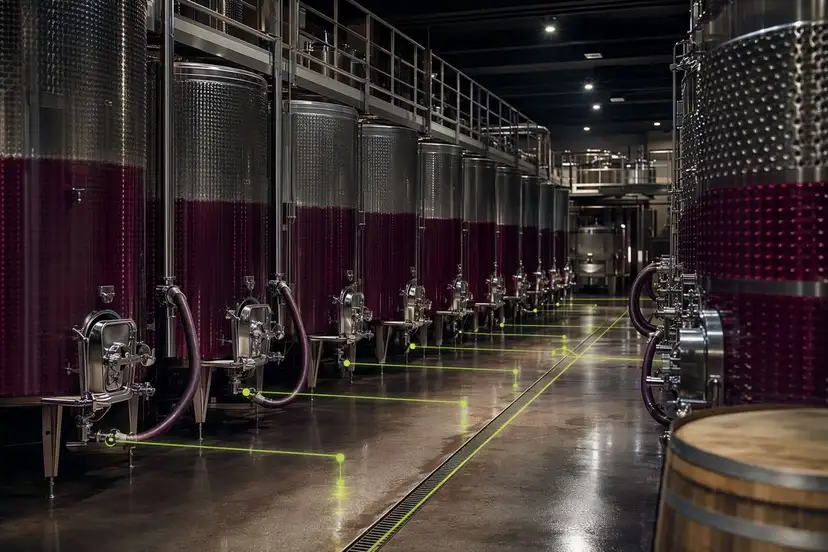
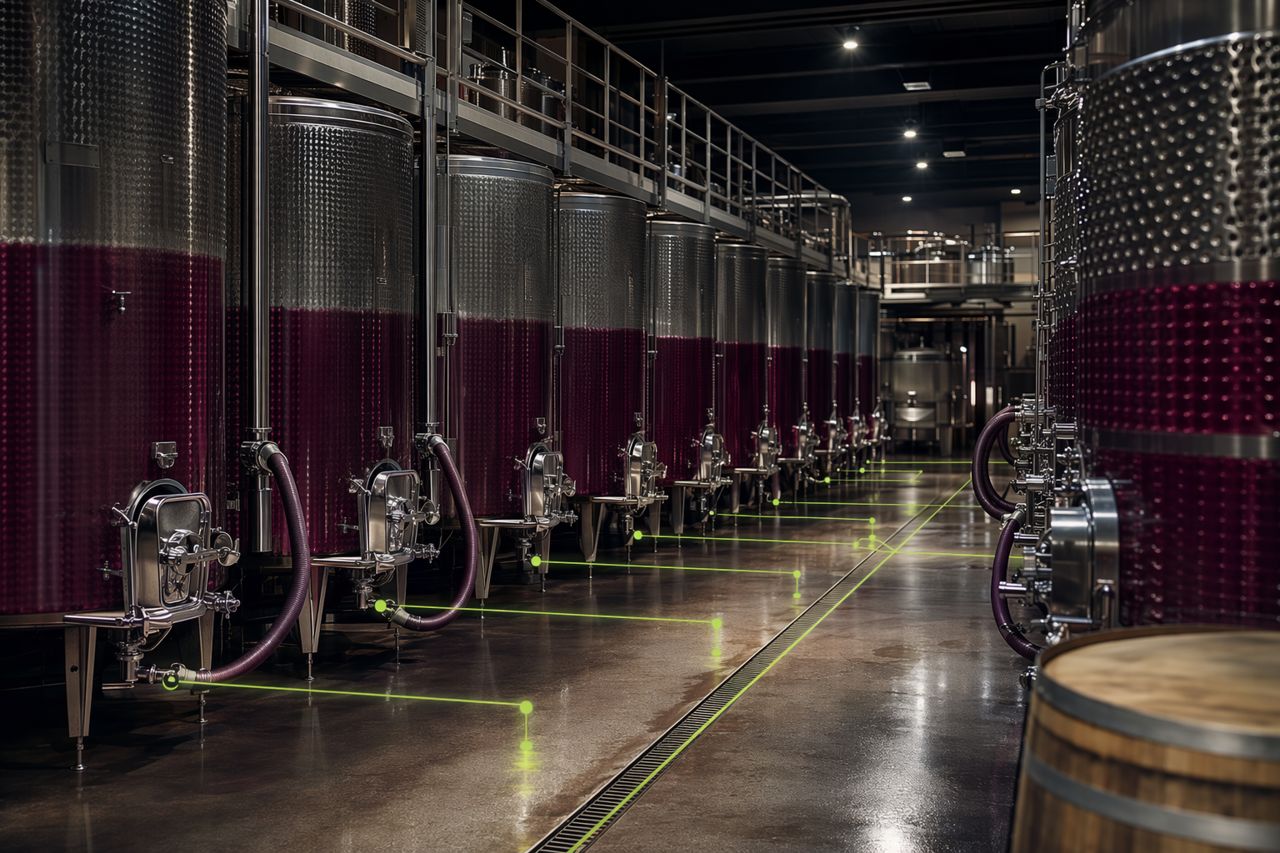
- Keep tanks mapped by MLF status so production, QA, and cellar crews work from the same plan
After MLF completion
- Confirm completion by lab protocol
- Adjust protection according to wine style and cellar policy
- Rack, clarify, or hold on lees according to sensory and stability goals
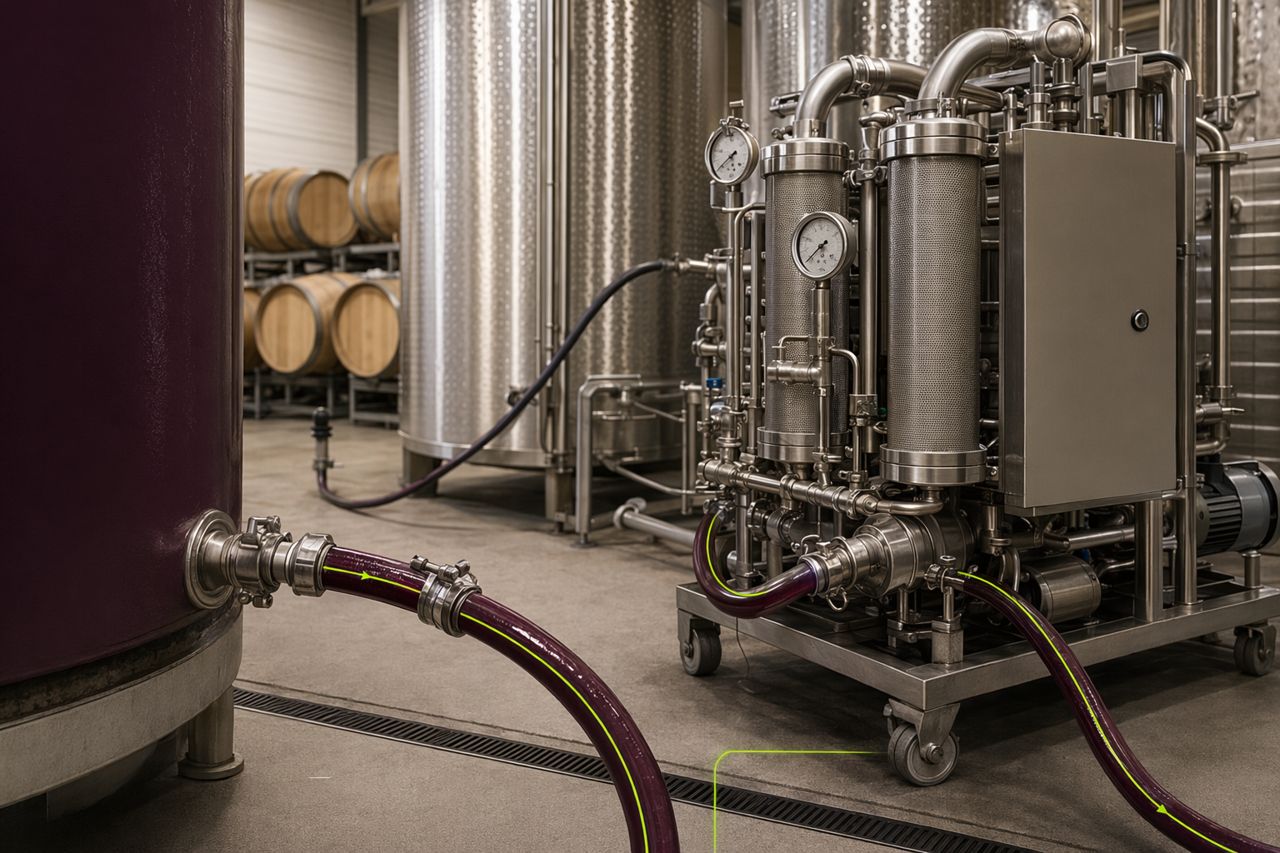
- Evaluate filtration readiness before committing to bottling or bulk shipment schedule
How Véraison Current Works with Red Wine Producers
Véraison Current supplies enzyme solutions for commercial wineries that need practical performance in real cellar conditions. Our role is to help production teams match enzyme selection to fruit condition, equipment reality, wine style, and throughput pressure.
We can support discussions around:
- Red must extraction and color development
- Press yield improvement without excessive harshness
- Viscosity reduction for difficult lots
- Clarification strategy before and after MLF
- Filtration load reduction for red wine finishing
- Process fit across tank, press, centrifuge, flotation, and filtration assets
- Lot segmentation for different style tiers
The objective is not to add complexity. It is to make the cellar plan easier to execute when harvest is moving fast.
Buyer Checklist: Questions to Ask Before Selecting an Enzyme Program
Use these questions before harvest planning or supplier review:
- Which red wine styles require rapid release, and which require extended structure development?
- Which varieties or vineyards have historically created high viscosity, poor settling, or filtration drag?
- Where is tank occupancy most constrained during the MLF window?
- Are sluggish MLF events linked to fruit source, alcohol, pH, temperature, or solids load?
- Are press fractions being managed for style, or blended back by necessity?
- Where does clarification delay the production calendar after MLF?
- What does the lab need to monitor, and what does the cellar team need to execute?
- Which lots would benefit from enzyme-supported extraction, and which require a lighter touch?
- What is the cost of one extra week of tank hold during peak production?
- What filtration issues recur after MLF, and can upstream matrix management reduce them?
The Operational Payoff
A disciplined MLF program gives red wine producers more than acid conversion. It gives the cellar a controlled path from fermentation to stability.
When enzyme strategy is integrated into that plan, the value shows up in practical ways: better extraction control, cleaner separation, improved press and transfer behavior, reduced filtration stress, and more reliable production timing.
That is the Véraison Current approach: cellar-grade enzyme support for wineries that need style precision and operational momentum in the same tank.
Request a Quote
Planning enzyme support for red wine production, MLF-adjacent clarification, extraction, or filtration readiness? Use the on-site request form and tell us about your grape varieties, production scale, equipment, and target wine style.
Request a quote