Press Yield vs. Phenolic Harshness: How Red Wine Cellars Decide When to Stop Pressing
In red wine production, the press is not just a separation step. It is a margin decision, a sensory decision, and a downstream filtration decision happening at the same time.
Every additional fraction can improve recovery. It can also bring harder seed tannin, elevated solids, longer settling time, higher filtration load, and a blending problem that follows the wine for months. For industrial wineries running commercial volumes, the question is rarely whether more liquid exists in the marc. The question is whether that liquid still belongs in the same quality stream.
As an enzyme supplier for wine production, Véraison Current supports cellars that want more controlled extraction and better juice release without turning the press cycle into a phenolic liability.
The commercial tension: more wine, not more problems
Press yield has a clear economic signal. A small percentage gain across large red fermenters can represent meaningful bottled volume. But late pressings can change the cost structure quickly:
- More suspended solids entering receiving tanks
- Higher turbidity and slower clarification
- Increased centrifuge or flotation demand
- Shorter filter life and more frequent pad or membrane intervention
- Increased astringency risk from seed and skin over-extraction
- More blending work to manage harsh press fractions
For cellar teams, the real target is not maximum extraction. It is recoverable, finishable wine that stays within the intended sensory and operational lane.
Why late press fractions turn harsher
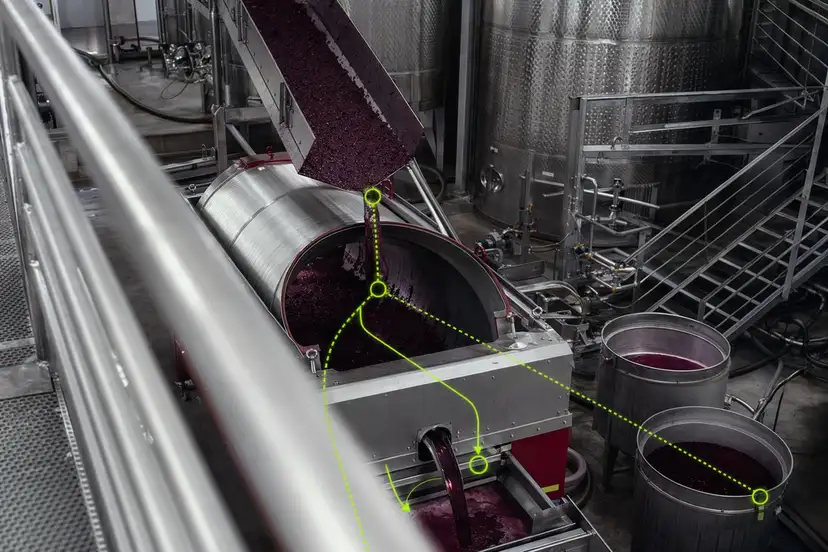
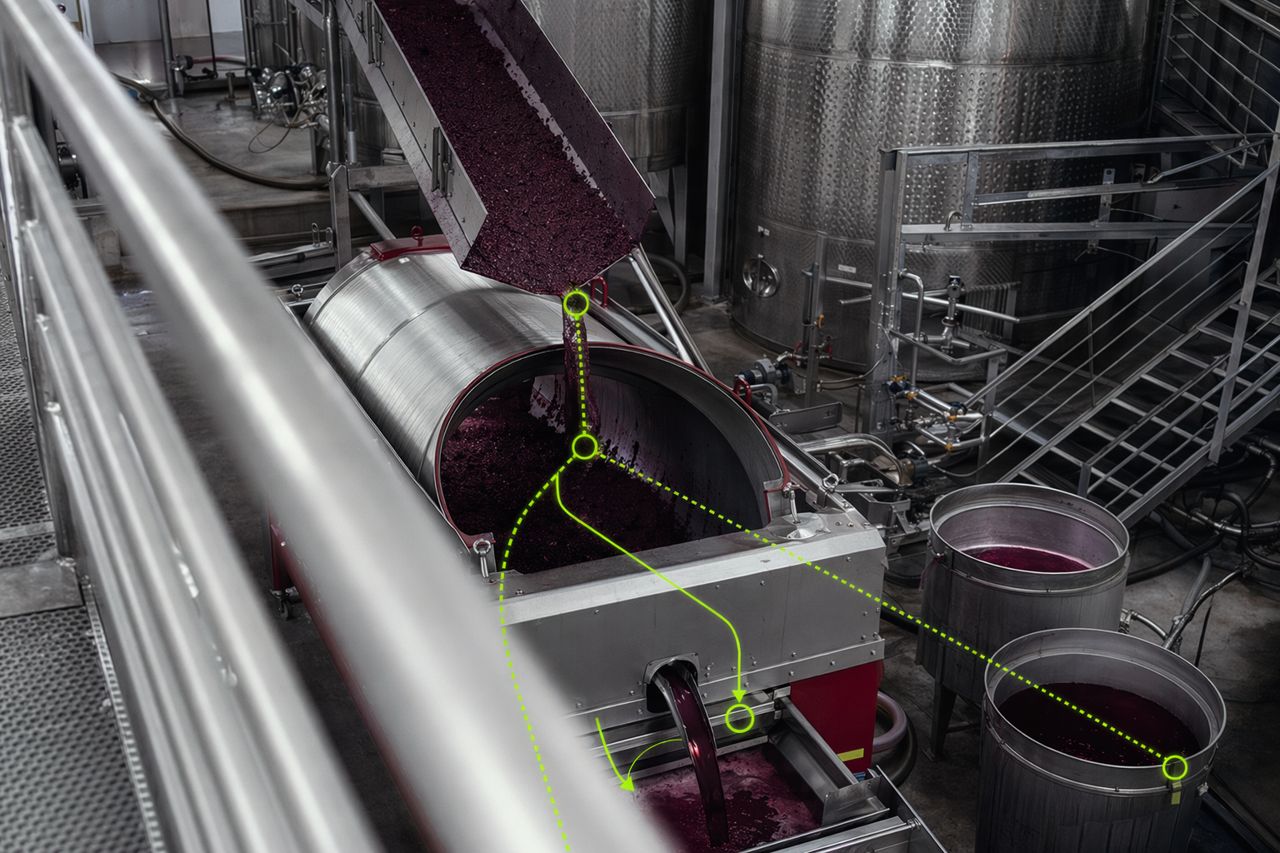
During pressing, the composition of the liquid changes as pressure increases and the cake compacts. Early free-run and light press fractions often carry fruit, color, and supple structure. Later fractions can carry more mechanical signature.
Key contributors include:
Seed tannin exposure
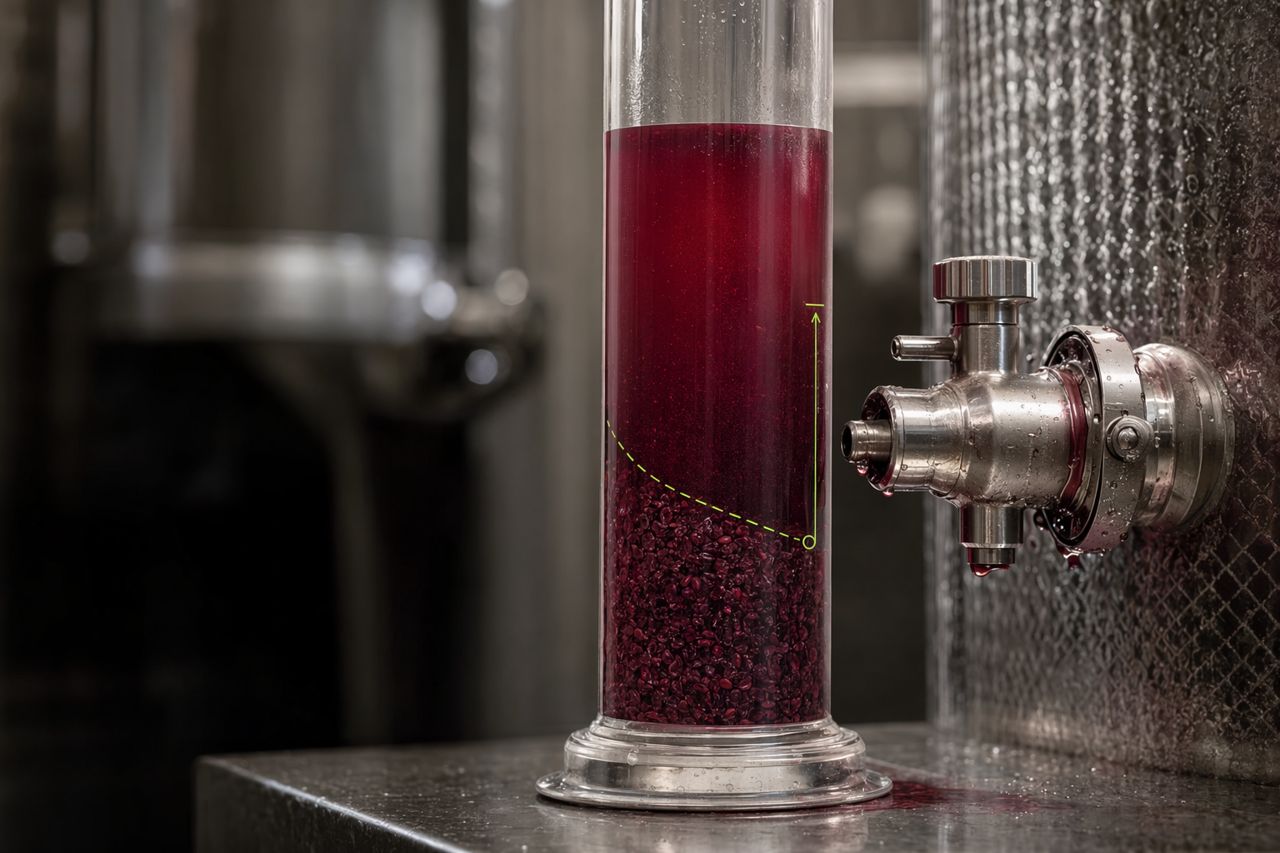
As pressure rises, seed breakage and abrasion can increase. This shifts the tannin profile toward bitterness, drying astringency, and a harder finish.
Skin and pulp compression
Compacted skins release liquid with higher solids and more bound phenolic material. The wine may look productive on the press readout, but it can become more demanding in settling and filtration.
pH and matrix effects
Small chemistry shifts across fractions can affect perceived hardness and microbial risk. Late fractions may need separate handling even when they appear acceptable by volume.
Heat and time under pressure
A slow, overloaded press cycle can intensify extraction. Long residence time in a compacted cake is rarely neutral.
The practical cellar question: when does yield stop paying?
Industrial wineries typically decide pressing cut points using a combination of sensory, analytical, and equipment signals. No single number is enough.
Common decision inputs include:
- Taste and mouthfeel by fraction
- Color density and hue shift
- Turbidity trend at the receiving line
- Press pressure curve and cake behavior
- Drainage rate decline
- Tank allocation and blending plan
- Target tier and customer specification
- Expected clarification and filtration capacity
The best cellars build a repeatable decision tree before harvest pressure begins. That decision tree should define which fractions stay with the main lot, which move to a press wine tank, and which require separate evaluation before blending.
Where enzyme strategy changes the press conversation
Enzymes do not replace pressing judgment. They improve the condition of the material entering the press and can widen the operational window when used correctly.
In red wine operations, targeted enzyme solutions can support:
- Earlier breakdown of pectic structure in must
- Improved juice release before aggressive pressure is required
- More efficient color and desirable phenolic extraction during maceration
- Faster settling of post-press solids
- Lower viscosity in difficult musts
- Reduced filtration pressure when clarification is properly managed
The value is not simply “more extraction.” The value is more controlled extraction before the cellar is forced into harsh mechanical recovery.
A better way to think about yield
Press yield should be measured in usable lots, not just recovered volume. A cellar may technically gain wine by pushing deeper into the cake, but if that fraction requires heavy correction, long holding, or dilution into better lots, the yield gain becomes less attractive.
A more useful framework is:
1. Free-run value
Protect the cleanest, most fruit-forward fraction. Keep it separate when premium intent justifies the tank space.
2. Light press opportunity
This is often where industrial wineries can gain controlled volume without excessive sensory penalty. Enzyme preparation, cap management, and press loading have a major impact here.
3. Hard press risk
Treat late fractions as a separate material stream. Evaluate them by taste, solids, and downstream cost—not only by liters recovered.
Operational signs that the press cycle is going too far
Your press may be crossing from productive to punitive when cellar teams see:
- Sharp drop in drainage rate with minimal volume gain
- Noticeable seed bitterness in fraction tastings
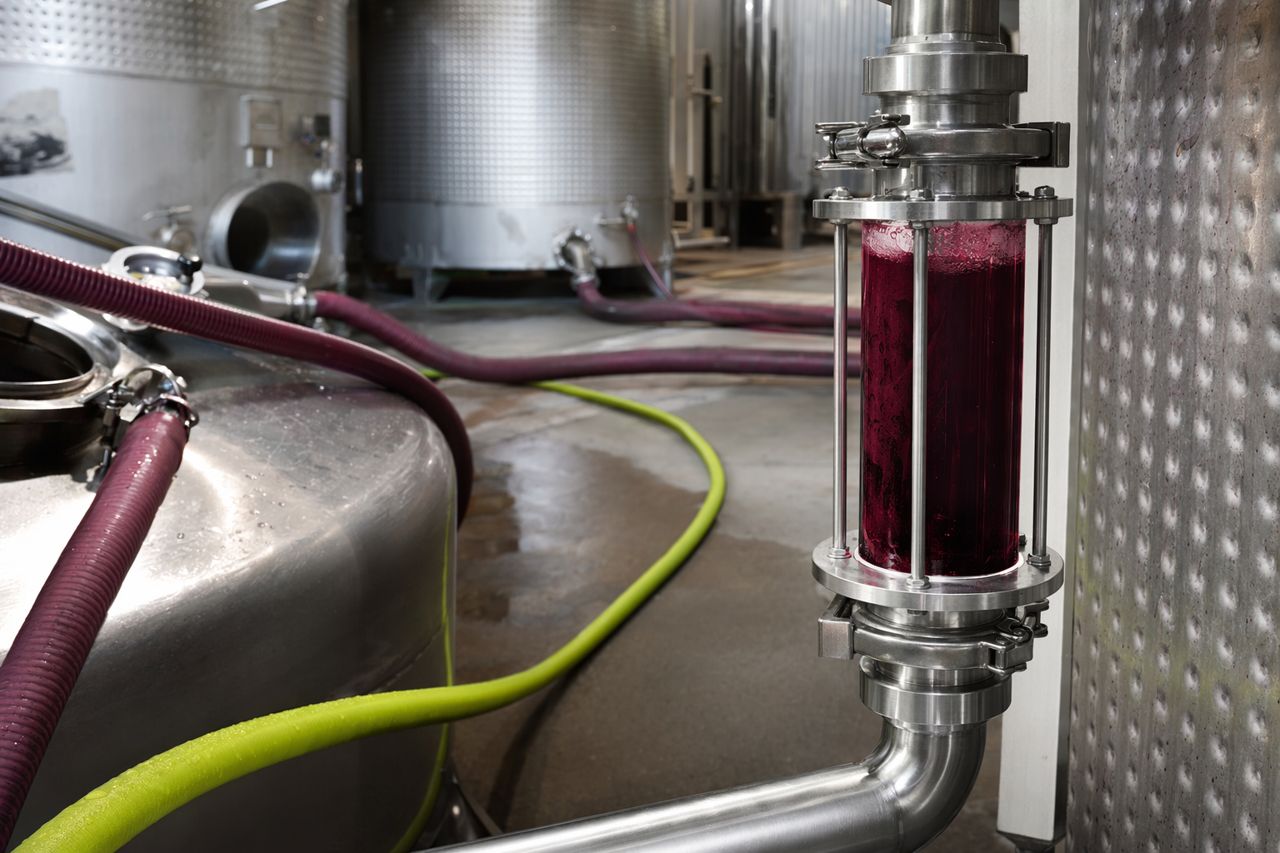
- Rapid turbidity increase in receiving lines
- Dark, muddy solids load rather than clean color extraction
- Longer clarification time than expected
- Filtration bottlenecks in lots with heavy press inclusion
- Blending trials that require more free-run wine to soften structure
These signs are especially important during compressed harvest windows, when pushing every lot can create a downstream traffic jam.
Enzyme-supported pressing: what good looks like
A well-designed enzyme program for red wine production should be built around the winemaking objective, not a generic addition point. For commercial cellars, the goal is usually one or more of the following:
- Improve recoverable volume at moderate pressure
- Increase extraction consistency between fermenters
- Reduce variability in difficult fruit lots
- Improve settling behavior after pressing
- Lower filtration load before bottling preparation
- Preserve fruit expression while managing tannin shape
The right selection depends on grape variety, maturity, pectin load, temperature, maceration time, equipment, and intended tier. A high-volume cellar making a fruit-driven red blend does not need the same extraction profile as a cellar producing structured reserve lots.
Practical controls for industrial red wine cellars
Separate fractions deliberately
Even when tank space is tight, separating press fractions gives QA and winemaking teams optionality. It is easier to blend a useful press fraction back than to remove harshness after the fact.
Taste fractions at the press, not only in the lab
Sensory checks during pressing are fast, cheap, and decisive. Bitterness and drying grip often show themselves before a standard lab panel explains the problem.
Track press performance by lot type
Build records by variety, vineyard source, maturity, fermentation temperature, maceration duration, enzyme treatment, press program, and clarification performance. Over time, this gives the production team a house-specific map of where yield gains are safe.
Manage solids as a cost center
A high-yield press decision that overloads clarification can move labor and equipment demand into the next week. Include settling time, racking loss, and filtration behavior in the yield calculation.
Align enzyme use with harvest reality
During peak intake, enzyme strategy should help the cellar move material cleanly and predictably. The best program is one the production crew can execute consistently under pressure.
The takeaway: stop pressing when the next fraction costs more than it gives
The decision to stop pressing is not a philosophical stance against yield. It is a production calculation.
The most profitable red wine programs recover volume early, protect sensory intent, and avoid creating high-solids, high-astringency fractions that consume tank space and filtration capacity. Enzymes can support that outcome by improving must breakdown, juice release, extraction control, and clarification behavior—before the press has to solve everything mechanically.
For industrial wineries, the objective is simple: more usable wine, fewer downstream penalties.
Request a quote
Planning an enzyme program for red wine pressing, extraction, or clarification? Use the on-site request form to tell us about your fruit profile, processing scale, and production goals. Véraison Current will help match the right cellar-grade solution to your operation.
Request a quote