Why Red Grapes Release Color Slowly | Véraison Current
A cellar-grade look at red grape skin structure, pectin, and enzyme timing for wineries managing extraction, press yield, clarification, filtration load, and sensory risk.
Request pricing A cellar-grade look at red grape skin structure, pectin, and enzyme timing for wineries managing extraction, press yield, clarification, filtration load, and sensory risk.
Request pricingIn a busy red program, slow color release is not just a sensory problem. It changes tank turns, pump-over strategy, cap management, press scheduling, lees handling, clarification time, and filtration pressure later in the lot’s life.
Some fruit gives up anthocyanins early. Other lots look tight for days, even when Brix, temperature, and cap work appear aligned. The difference often starts in the skin: cell-wall structure, pectin distribution, berry maturity, and how the fruit has responded to season, site, and harvest logistics.
For wineries evaluating an enzyme supplier for wine production, the practical question is not “can we extract more?” It is “can we release color and phenolics in a controlled window without creating avoidable haze, harshness, or downstream filtration load?”
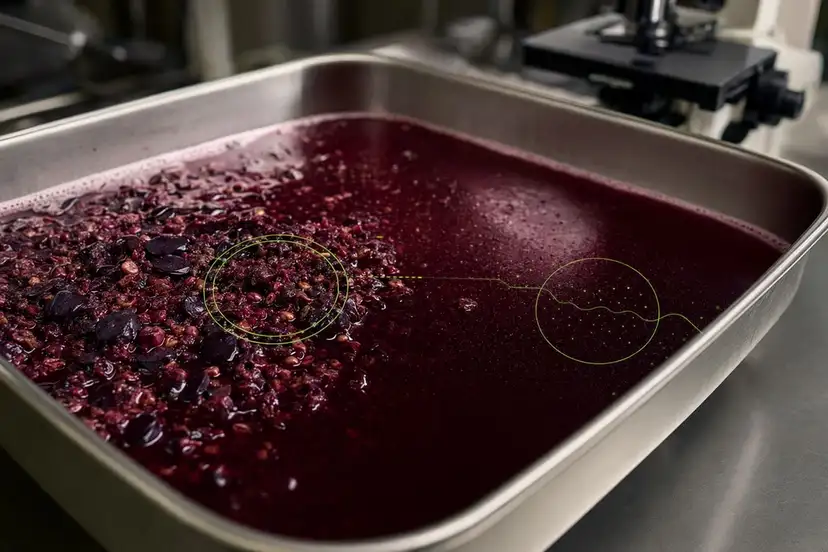
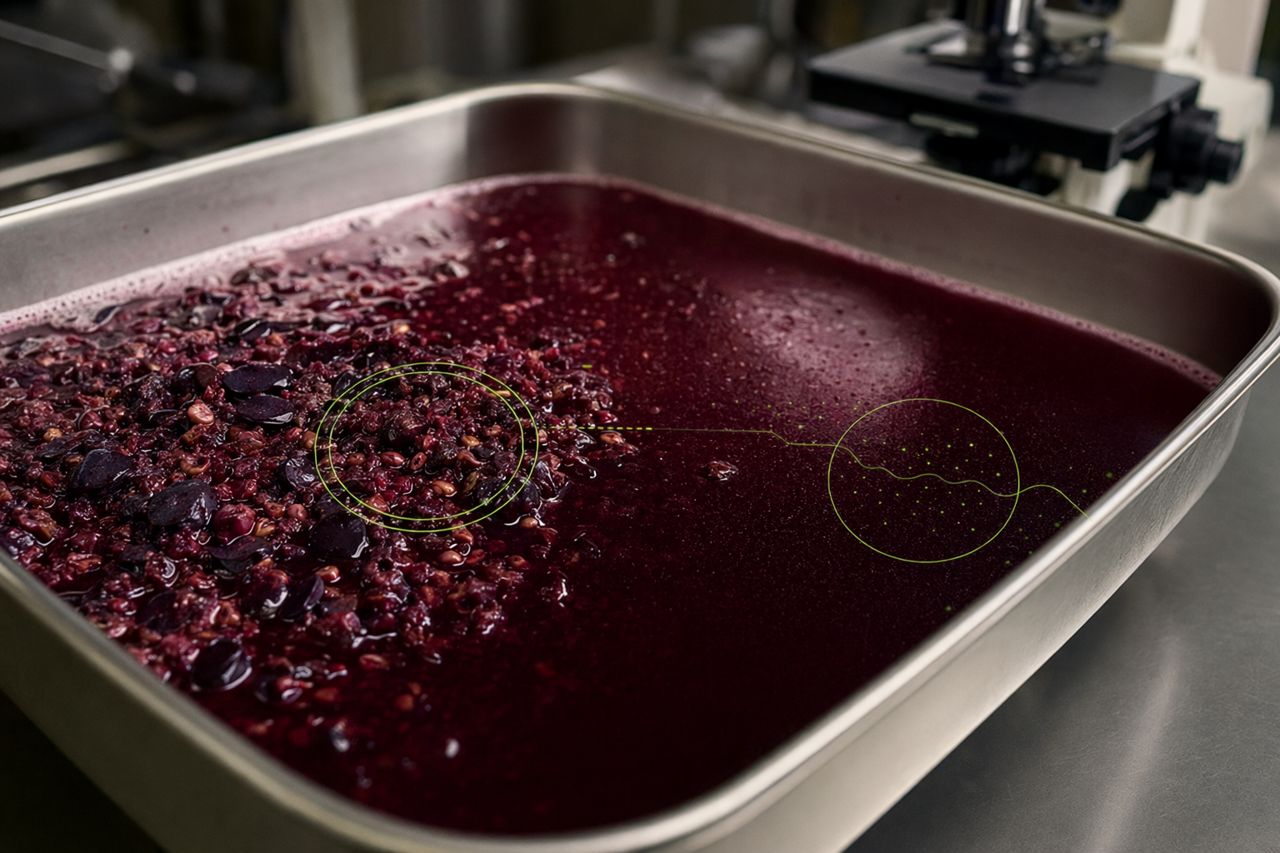
Red grape color compounds are concentrated primarily in skin cells. To move into the must, they must pass through a network of structural materials that can either open readily or resist extraction.
Key barriers include:
A red grape skin is not a uniform membrane. It is a layered, season-shaped structure. Two lots with similar sugar and acid can behave very differently in the fermenter because their skins have different resistance to breakdown.
Pectin acts like a natural adhesive in fruit tissue. In red must, pectin can slow skin-cell separation and keep valuable compounds physically trapped for longer than the production schedule allows.
When pectin remains intact, winemakers may see:
Pectin is not the only driver of color release, but it is one of the most operationally important because it affects both extraction and juice movement.
Slow color release can be varietal, seasonal, or process-driven.
Some red varieties have thicker skins, tighter cell-wall structure, or anthocyanin profiles that extract less readily. Others release color quickly but may bring tannin or seed-derived bitterness if maceration is pushed too far.
A warm season can bring sugar faster than skin maturity. A cooler or uneven season can leave skins more resistant, even when fruit is harvested at a commercially necessary date.
Small berries often have higher skin-to-pulp ratio, but that does not guarantee fast extraction. Water stress, dehydration, and tough skins can increase resistance to controlled breakdown.
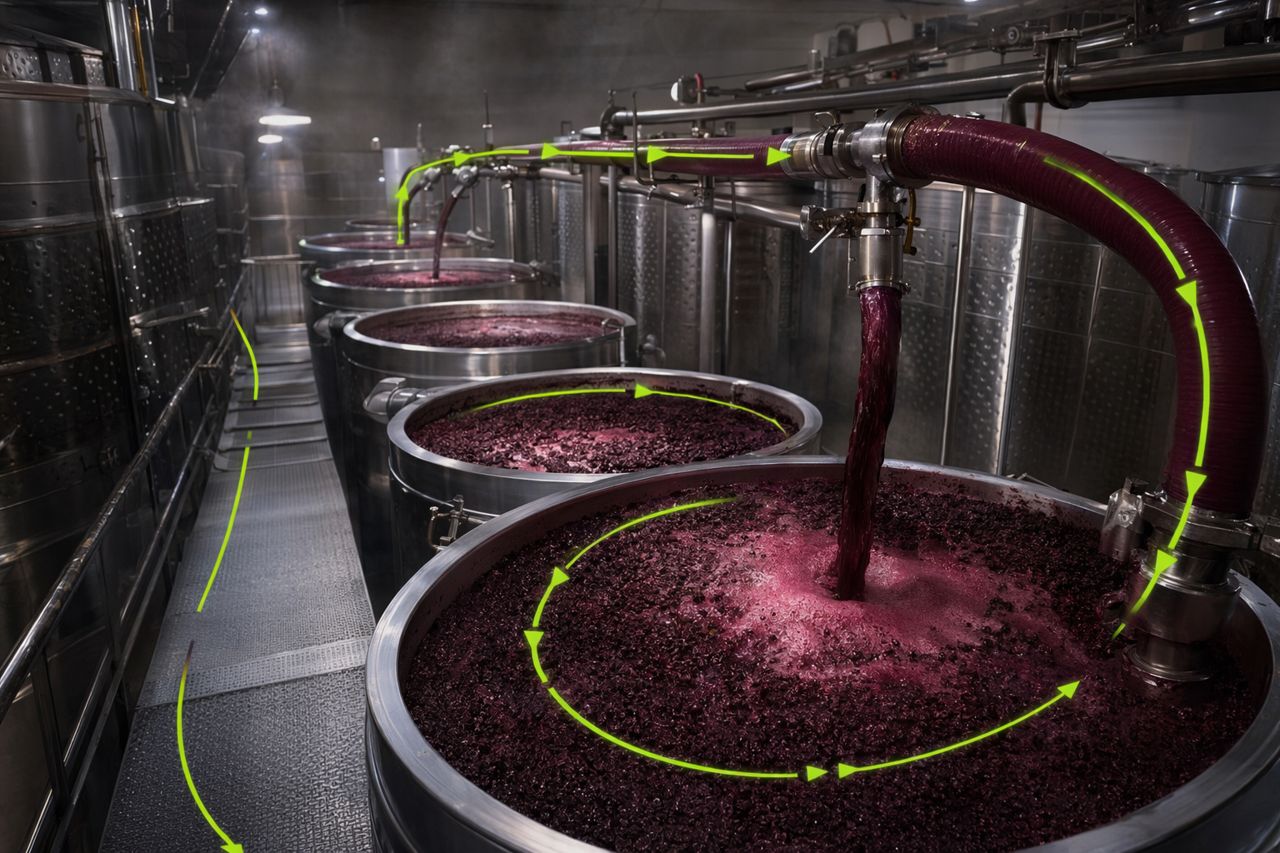
Crusher setting, must temperature, SO2 timing, cold soak duration, yeast kinetics, and cap management all affect how quickly color enters solution and how much physical stress the lot receives.
A winery does not extract color in theory. It extracts color inside a production calendar.
Harvest brings constraints:
If color release is late, the cellar is forced into decisions: extend maceration, intensify cap work, accept lower color, or push extraction in ways that may increase bitterness, astringency, or solids load.
This is where enzyme strategy becomes an operational tool rather than a lab concept.
Maceration enzyme systems are designed to help break down selected structural polysaccharides in the grape skin and pulp matrix. In practical winery terms, the aim is to improve access, flow, and separation.
Used appropriately, they can support:
The value is control. A well-selected enzyme approach should help the winemaker reach the target extraction profile with fewer corrective moves later.
More extraction is not automatically better. Commercial red wine production depends on balance: color density, tannin shape, aroma protection, microbial security, tank velocity, and finishing performance.
The wrong extraction pressure can create problems:
A cellar-grade enzyme program should be matched to fruit condition, temperature, contact time, and the desired wine style. The goal is not to erase vintage character. It is to reduce avoidable friction between grape biology and production reality.
Consider a targeted maceration enzyme review when red lots show:
These symptoms do not always point to the same cause. But they are strong indicators that skin and pectin behavior should be part of the cellar conversation.
Before choosing an enzyme solution, define the operating conditions.
A premium, structured red may require different extraction timing than an earlier-release fruit-forward wine. The enzyme plan should support the intended sensory outcome.
Timing influences what the enzyme can affect. Addition during early maceration is different from late-stage correction. Early decisions typically give the cellar more control.
Cool must conditions can slow all extraction dynamics. A supplier should help set realistic expectations based on cellar temperature and contact time.
Pump-over frequency, délestage, punch-downs, and mixing intensity all interact with skin breakdown. Enzyme use should complement—not compensate for uncontrolled force.
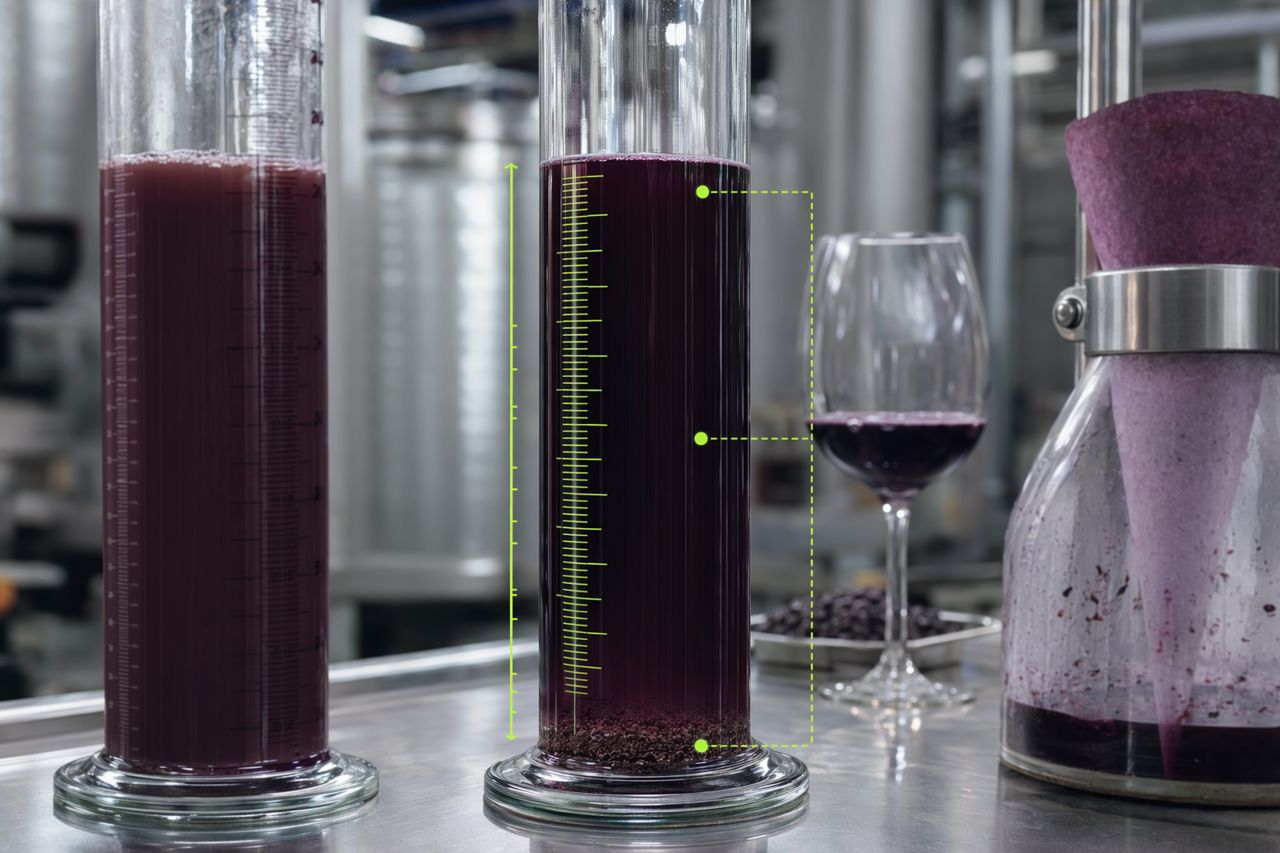
A good maceration strategy looks beyond color. It considers lees compaction, settling, rackability, and filtration load.
Véraison Current works with industrial wineries that need enzyme programs to fit real harvest conditions: variable fruit, compressed intake windows, limited tank time, and strict quality targets.
Our approach is built around:
We help production, winemaking, lab, and QA teams align enzyme selection with the lot’s behavior in tank and the winery’s downstream requirements.
Slow color release is often a skin-structure problem before it becomes a winemaking problem. Pectin-rich tissue, tough skins, uneven maturity, and compressed cellar timing can all delay extraction and increase process pressure.
A targeted enzyme program can help open the path for color release while supporting better flow, separation, and finishing efficiency. The strongest results come from matching the enzyme strategy to fruit condition, maceration timing, and the winery’s production goal.
If your red program is fighting delayed color, heavy solids, or filtration drag, Véraison Current can help evaluate the enzyme fit for your cellar.
Request a quote through the on-site form to discuss lot profile, harvest timing, and the red-wine production outcomes you need to protect.
Tell us your application and volume — we reply with pricing and lead time.