Seasonal Crush Procurement for Winery Enzymes
A cellar-grade procurement guide for industrial wineries stocking enzyme solutions before crush: yield, settling, extraction, filtration load, and sensory control.
Request pricing A cellar-grade procurement guide for industrial wineries stocking enzyme solutions before crush: yield, settling, extraction, filtration load, and sensory control.
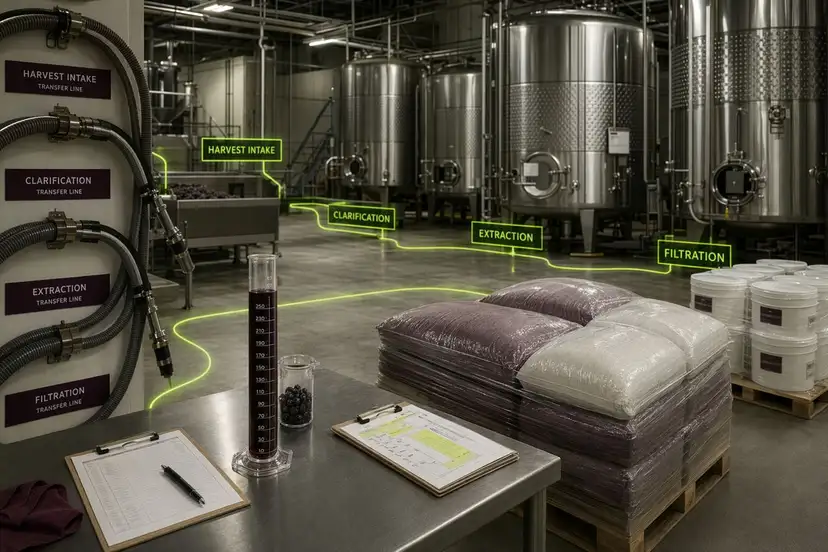
Request pricingCrush does not reward improvisation. Once fruit is moving, every delay compounds: presses queue, tank space tightens, juice waits warmer than planned, clarification bottlenecks appear, and filtration teams inherit decisions made days earlier.
For an industrial winery, enzyme procurement is not simply a consumables exercise. It is a seasonal production-control decision tied to throughput, press yield, extraction targets, settling behavior, filtration load, and sensory risk.
If you are evaluating an enzyme supplier for wine production, build the conversation around your crush calendar and processing realities, not just product names. The right seasonal stock position should help the cellar stay flexible without filling the warehouse with slow-moving inventory.
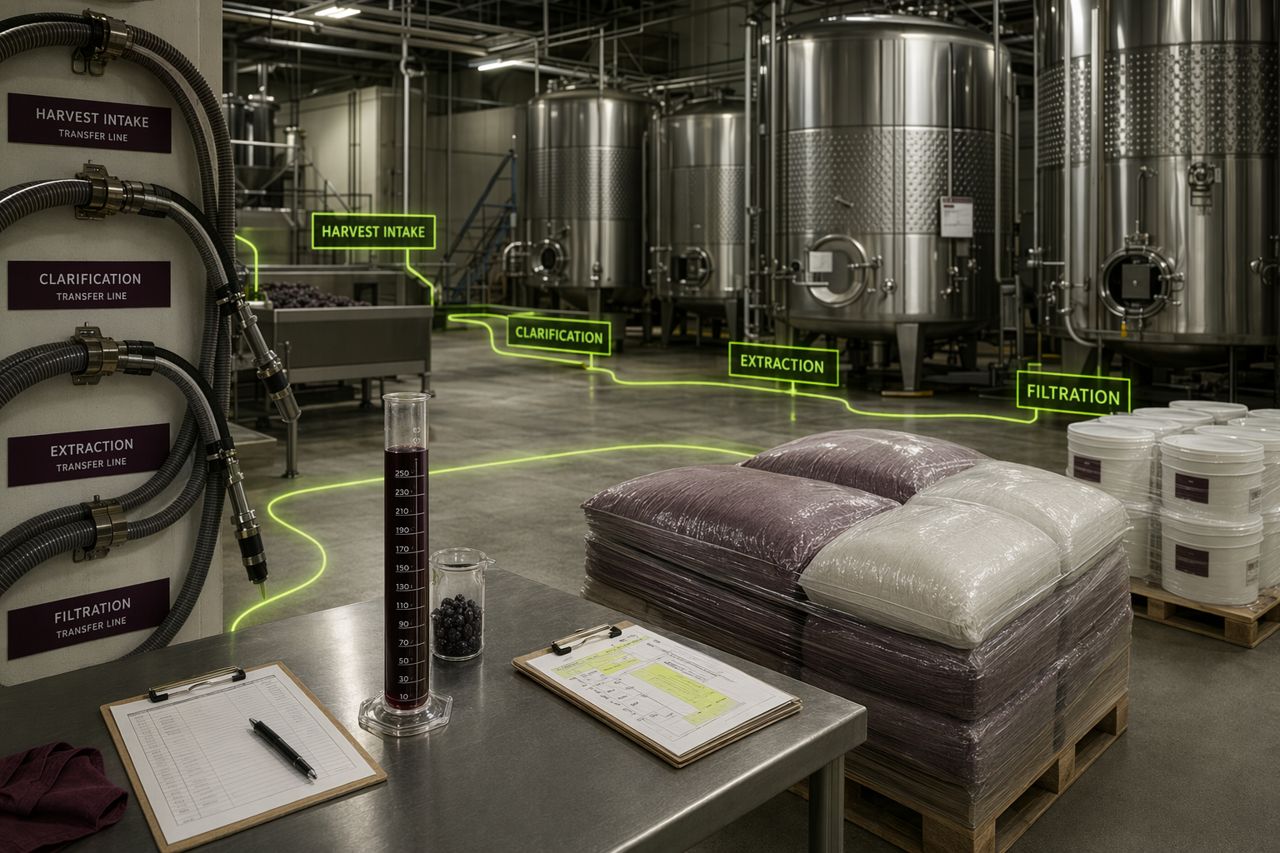
Before selecting enzyme categories, align procurement with the way fruit will actually enter the winery.
A practical crush map should include:
This turns enzyme buying into a coverage plan. The goal is not to stock everything. The goal is to make sure the cellar has the right tools when fruit condition, weather, or production pace changes.
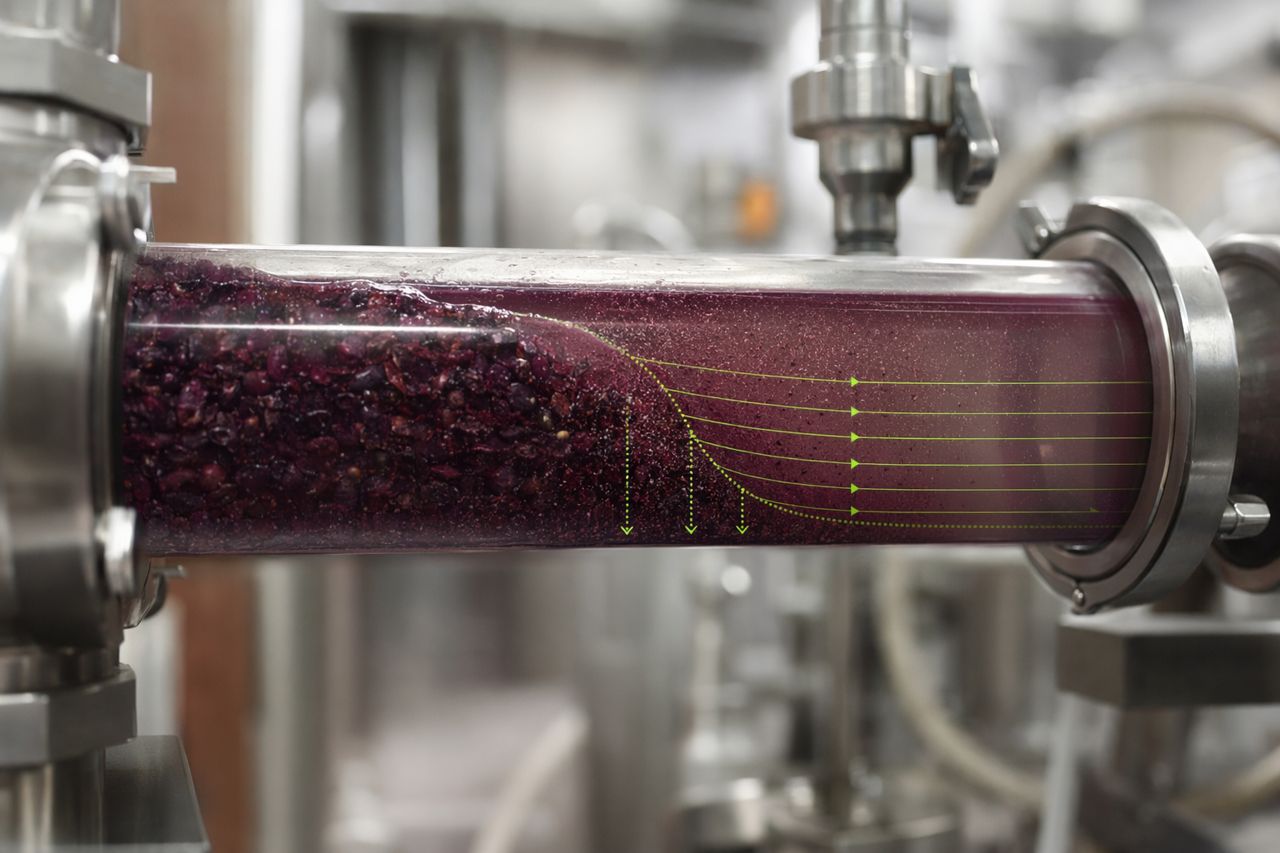
White and rosé production often exposes the first major bottleneck of harvest: juice settling. When must viscosity is high or fruit arrives with elevated solids, clarification can consume tank space and delay inoculation, blending, or transfer.
A crush-ready clarification enzyme should support:
Procurement note: stock enough clarification support for your early white and rosé intake, plus a buffer for machine-harvested lots or warm fruit that may carry more suspended material.
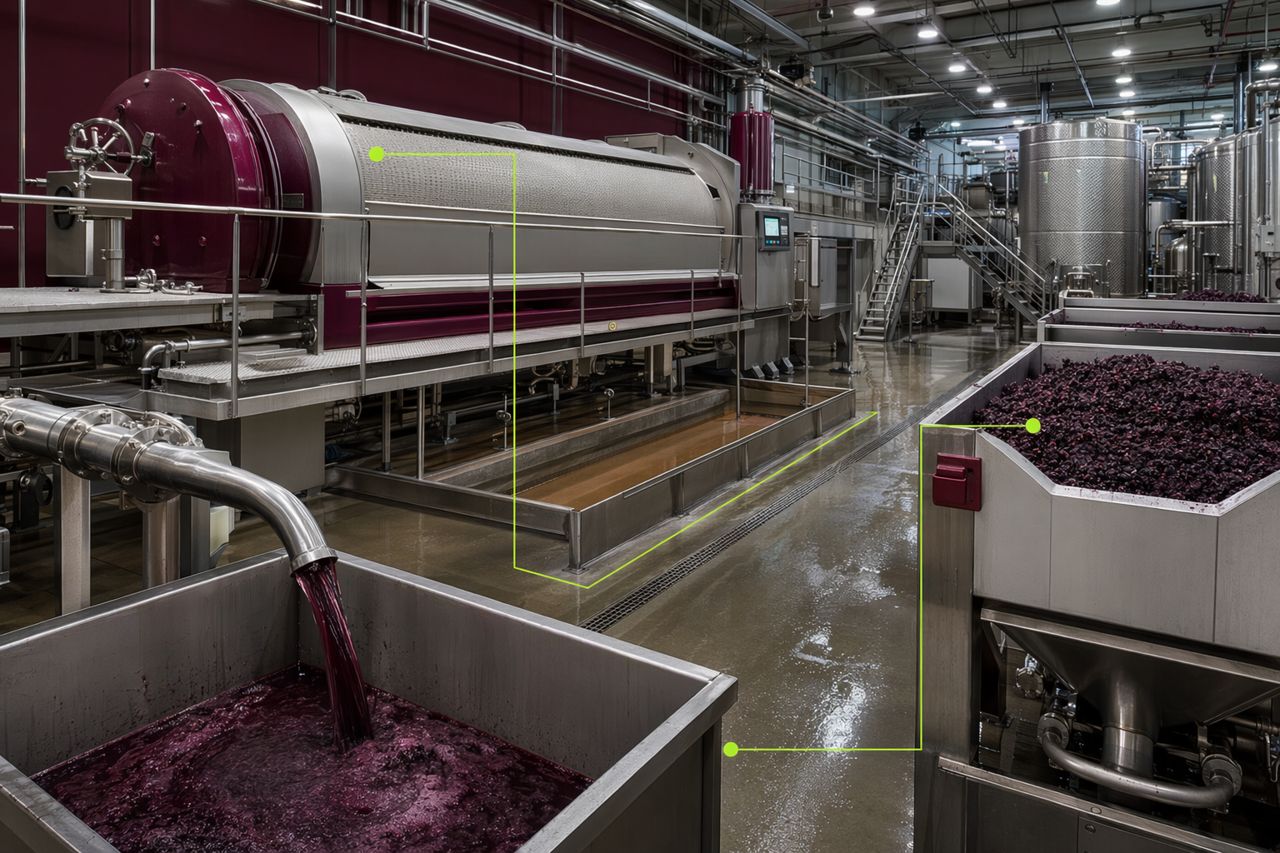
Press yield is not only a recovery metric. It affects cycle time, pomace handling, juice quality, and the number of hours the press remains tied to a lot.
Enzyme tools that improve drainability can help wineries manage:
The commercial value is practical: when presses are the constraint, improved drainability can protect schedule integrity while supporting quality boundaries.
Red winemaking is not a single extraction problem. A premium tier may prioritize structure and color integration, while a high-volume program may require dependable color release, tank efficiency, and predictable pressing.
Seasonal red enzyme coverage should be evaluated against:
The best procurement plan gives winemakers options. It should support extraction where it is wanted, while respecting the sensory ceiling of each label tier.
Some fruit does not behave like the intake forecast. Heat-stressed grapes, botrytized lots, late-season whites, certain aromatic varieties, and heavily processed machine-harvested fruit can raise viscosity and create stubborn haze or settling problems.
Keep a specific contingency position for difficult lots, especially if your winery has historically seen:
This is where procurement discipline matters. A contingency stock is not the same as overbuying. It is a defined reserve for known seasonal risk.
Filtration performance is shaped long before wine reaches the filter. Enzyme selection during crush can affect solids handling, colloidal load, and the downstream work required to reach bottling or bulk-shipping readiness.
For industrial wineries, the procurement brief should connect enzyme use to filtration economics:
A good enzyme supplier should understand that the buyer is not purchasing a drum or pail. The buyer is purchasing process control across the season.
The answer depends on intake risk, production segmentation, and service expectations. A practical approach is to divide inventory into three bands.
This covers your planned, high-confidence fruit intake by category: white clarification, rosé clarification, red extraction, and press/drainability support. It should match the production plan already approved by winemaking, cellar operations, and procurement.
This covers peak overlap: the week when early whites are still moving, rosé is active, red fruit begins arriving, and tank space becomes expensive. Surge stock prevents the winery from relying on expedited purchasing when every supplier and freight lane is under pressure.
This covers adverse fruit condition, unexpected viscosity, higher solids, rot pressure, delayed picking, or a change in processing route. The contingency should be intentional and reviewed after harvest so the next season becomes more accurate.
Use these questions to separate a transactional vendor from a production partner:
These questions keep the discussion operational. They also reduce the risk of inconsistent cellar decisions during night shifts or weather-driven harvest changes.
Seasonal procurement should include more than product availability. Before fruit arrives, confirm that your team has current technical documentation, handling guidance, storage requirements, lot traceability information, allergen and compliance statements where relevant, and internal approval for intended applications.
For industrial sites, this prevents slowdowns when QA, food safety, procurement, and production all need the same information at the same time.
Early white programs often receive the planning attention, but late-season reds, difficult press loads, and filtration consequences can create bigger cost pressure later.
Settling, flotation response, haze, solids compaction, and filterability are connected, but not identical. Stocking should reflect the specific bottleneck your facility expects.
The right enzyme still has to work in your cellar workflow. Packaging should match how your team receives, stores, stages, and applies processing aids during peak production.
Too many overlapping options create shift-to-shift variation. A compact, well-briefed enzyme set is usually more valuable than a crowded shelf.
Before the first fruit arrives, confirm:
Véraison Current supports industrial wineries with cellar-grade enzyme procurement planning for seasonal crush. We help align enzyme selection with fruit intake, clarification strategy, extraction goals, press constraints, filtration load, and sensory guardrails.
If you are preparing your crush inventory, use the on-site request form and share your tonnage forecast, wine style mix, expected harvest windows, and known process bottlenecks.
Request a quote for crush-season enzyme supply
A tighter procurement plan gives your cellar more room to move when the fruit starts moving.
Tell us your application and volume — we reply with pricing and lead time.