Red Wine Color Extraction Enzyme for Commercial Wineries
Commercial red programs live under pressure: fruit arrives fast, tank space tightens, press schedules move, and color decisions made in the first days of maceration can follow a lot all the way to bottling.
Véraison Current supports industrial wineries with pectinase-centered enzyme solutions designed to improve red grape cell-wall breakdown during maceration. The goal is practical: help release anthocyanins and desirable phenolic material more efficiently while improving must flow, press behavior, clarification, and downstream filtration readiness.
If you are evaluating an enzyme supplier for wine production, this page is built for cellar, lab, QA, and procurement teams that need technical confidence without sales theater.
Request a quote through our on-site form
Built for red maceration, not generic processing
Red wine color extraction depends on grape variety, maturity, skin condition, crushing profile, fermentation temperature, cap management, alcohol development, and contact time. A well-matched enzyme program can help open the pectic structure of grape skins so color compounds move into the must earlier and more consistently.
For commercial wineries, that can translate into:
- Stronger early color release during cold soak or active fermentation
- More efficient extraction from thick-skinned or unevenly mature fruit
- Better free-run movement and press fraction handling
- Reduced must viscosity for pumping, mixing, and draining
- Faster solids separation after pressing
- Lower clarification and filtration burden before stabilization
- More consistent extraction across blocks, varieties, and intake windows
What the enzyme is doing in the tank
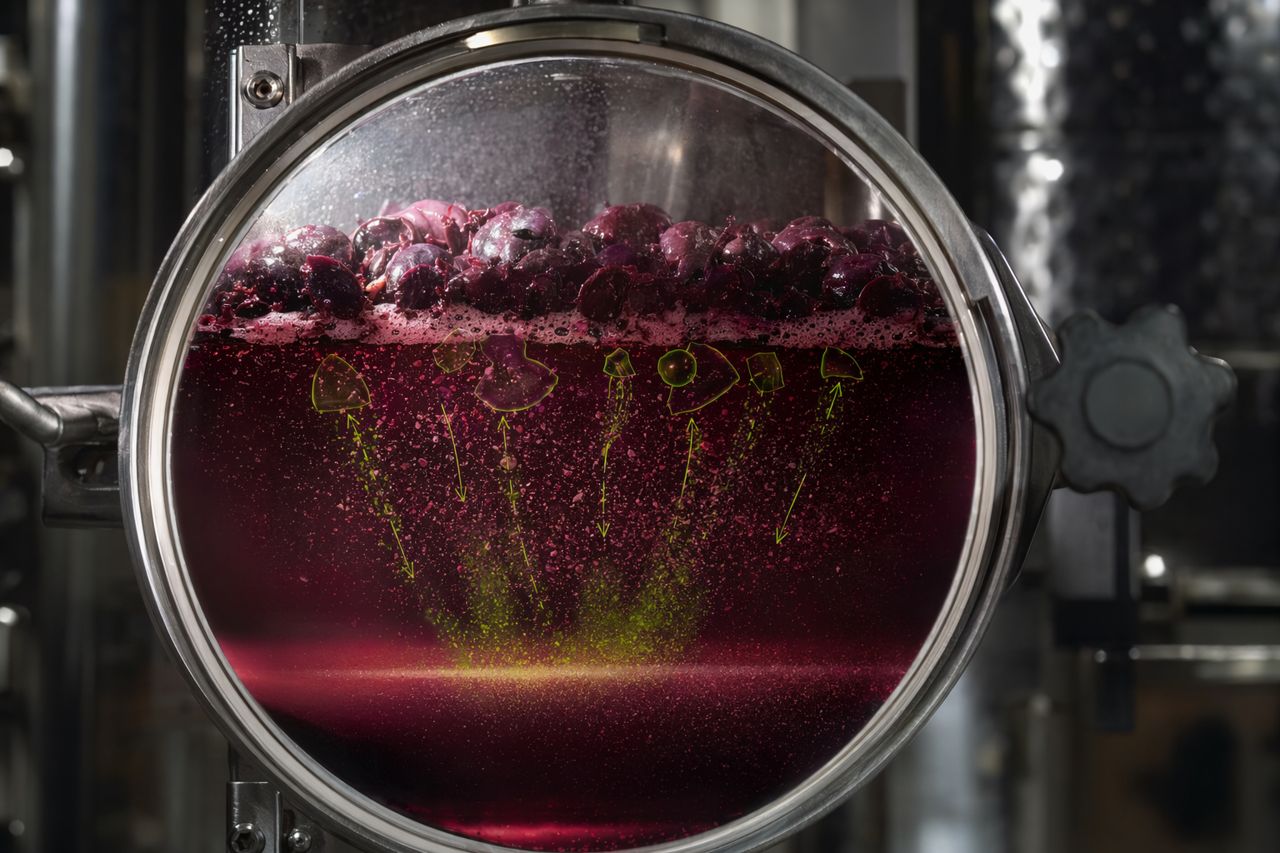
Red grape skins contain pectin-rich structural material that can restrict juice movement and slow phenolic release. Pectinase-centered maceration enzymes help loosen that structure, improving contact between juice and skin tissue.
The result is not simply “more extraction.” For production wineries, the value is controlled access: improving pigment release while managing sensory risk, press loading, and later cellar operations.
Key commercial outcomes
1. Earlier color development
When pigment release begins sooner, winemaking teams can track extraction trajectory with more confidence. This is especially useful when tank turnover, press availability, or style targets require tighter maceration decisions.
2. Improved press yield and drainage
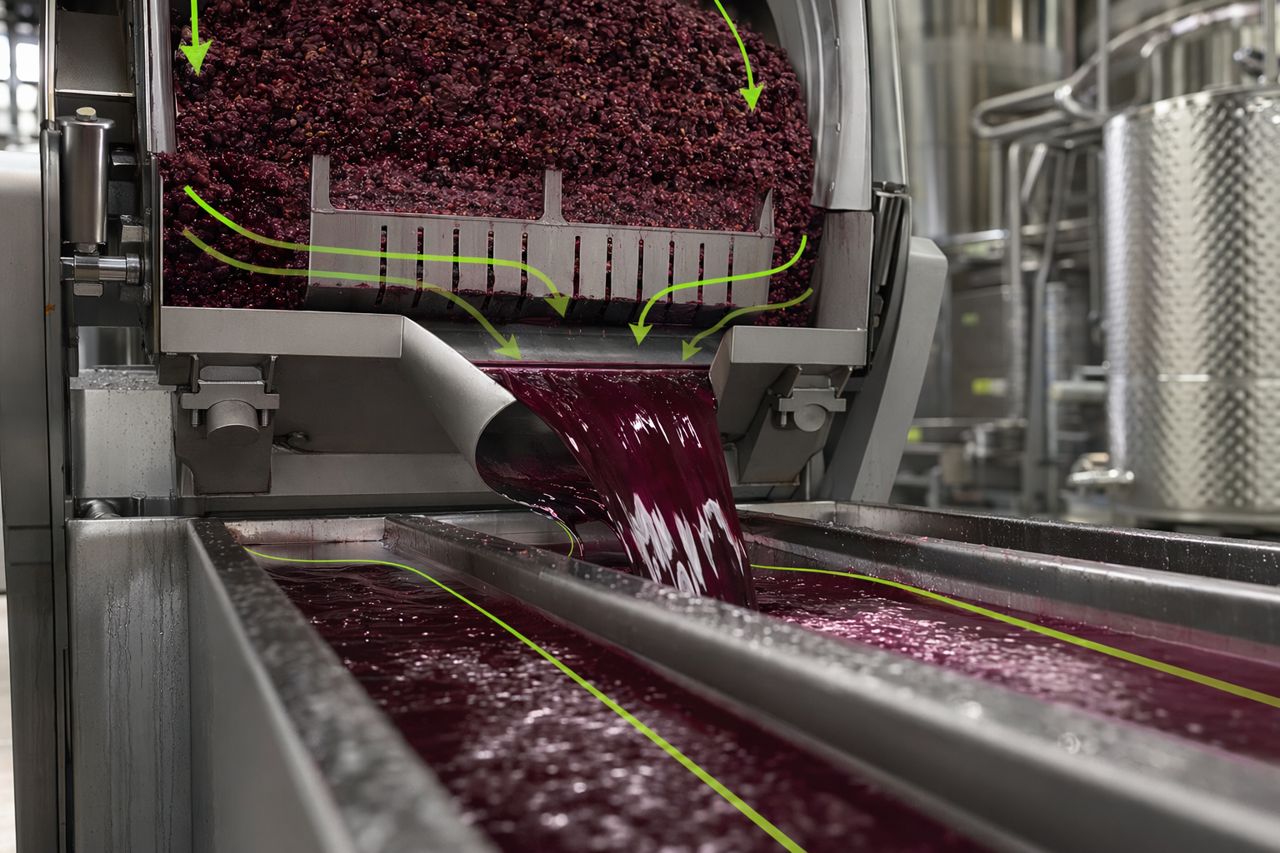
By reducing pectic drag, maceration support can improve liquid release from pomace. That supports better press efficiency and cleaner separation between free-run, light press, and heavier press fractions.
3. Lower solids and filtration pressure
Pectin-related haze and colloidal load can slow clarification and increase filtration resistance. Enzyme-assisted breakdown can help reduce the burden placed on settling, centrifugation, crossflow, depth filtration, or final polishing steps.
4. More repeatable red wine handling
Industrial wineries manage fruit variability at scale. Enzyme support can help normalize handling behavior across lots that differ in variety, maturity, rot pressure, skin toughness, or harvest logistics.
Where it fits in a commercial red wine workflow
Véraison Current red color extraction enzyme programs are typically evaluated around these points:
- At crush or destemming for early skin contact support
- During cold soak where early pigment release is desired
- At the start of red fermentation for active maceration programs
- Before pressing when drainage and press behavior are key constraints
- In high-throughput harvest windows where tank and press timing matter
Your technical recommendation should be matched to fruit condition, process temperature, contact time, sulfur strategy, yeast plan, cap management, and target wine style.
Designed around sensory control
More extraction is not always better. Commercial red programs need color density, but they also need balance, mouthfeel, aromatic cleanliness, and stable finishing performance.
A fit-for-purpose enzyme program should support pigment release without encouraging rough, uncontrolled extraction. Véraison Current helps buyers evaluate the operational tradeoffs: extraction rate, press timing, fraction separation, settling behavior, and potential impact on finished wine style.
Suitable red wine applications
This page is relevant for wineries producing:
- Cabernet Sauvignon, Merlot, Syrah, Malbec, Zinfandel, Pinot Noir, Grenache, Tempranillo, Sangiovese, and red blends
- Premium red lots where color intensity and texture are closely managed
- High-volume red programs where press yield and filtration load affect cost
- Thermovinification or rapid extraction processes requiring efficient solids handling
- Fruit with challenging skin structure, variable maturity, or compressed intake timing
What to discuss before quoting
To recommend the right red wine color extraction enzyme approach, our team will usually ask for:
- Grape varieties and annual red wine production volume
- Typical harvest intake rate and tank size range
- Crush, destem, cold soak, and fermentation practices
- Desired maceration length and press schedule
- Current color, yield, clarification, or filtration bottlenecks
- Whether the target is premium extraction, throughput improvement, or both
- Packaging timeline and stability requirements
This keeps the quote tied to cellar reality rather than a generic product listing.
Why Véraison Current
Véraison Current is built for industrial winery buyers who need supply confidence, technical clarity, and practical production alignment. We focus on enzyme solutions for wine processing, with communication that respects the harvest calendar and the decisions made by cellar, lab, and QA teams.
You get:
- A wine-specific technical conversation
- Application guidance for commercial red programs
- Supply options aligned with production scale
- Documentation support for purchasing and QA review
- Clear quoting through the on-site contact form
Request a quote
Tell us what you are making, where color extraction is underperforming, and what constraints matter most: tank time, press yield, clarification, filtration, or sensory target.
Request a quote through the on-site form
Véraison Current will respond with a practical red wine enzyme supply recommendation for your production context.